Samya · 5 cards · 20 Nov
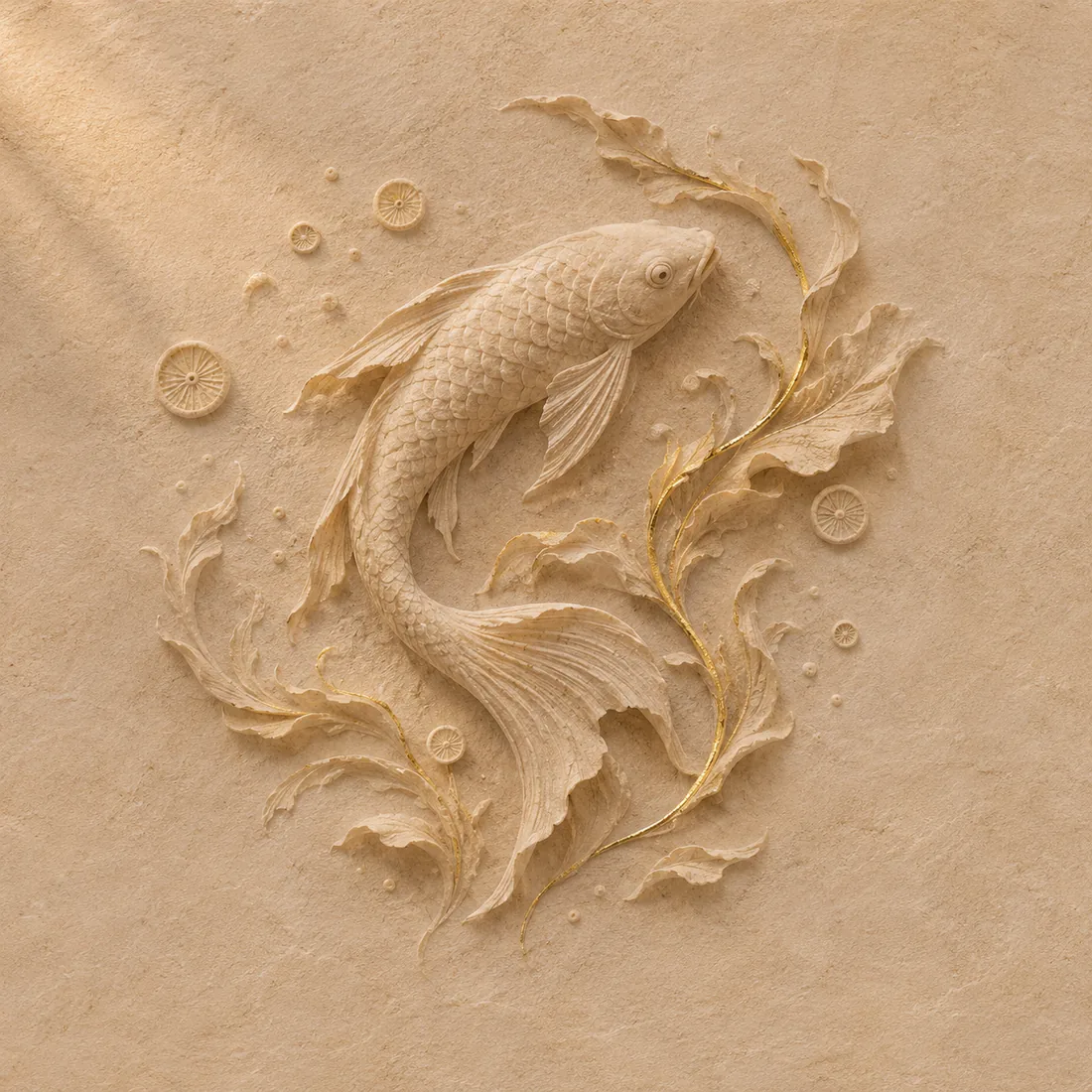
Where do fish get their omega-3? Not from themselves.
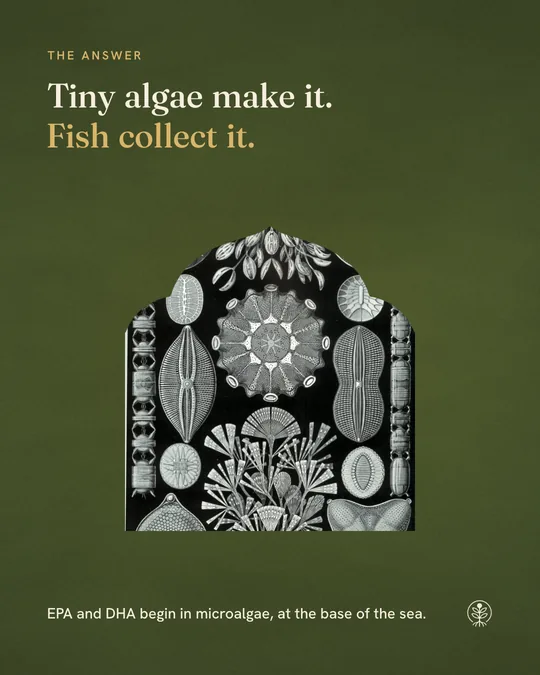
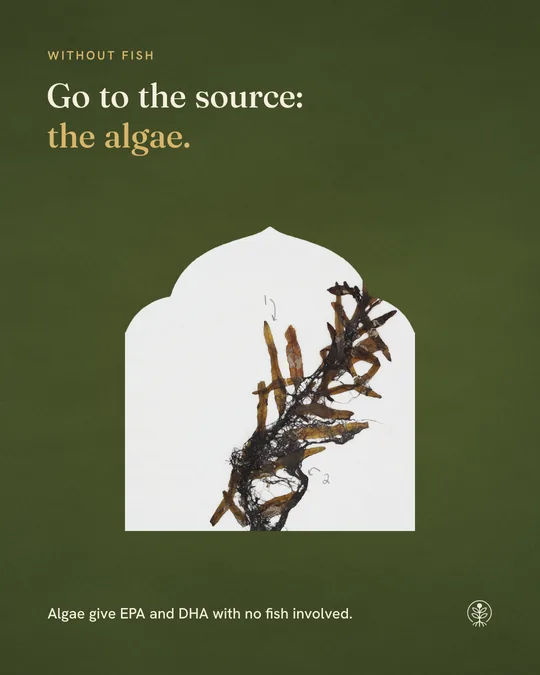

EPA and DHA, the long-chain omega-3s, are made by microalgae at the base of the sea's food chain. As the algae are eaten and passed up the chain, fish collect these fats in their bodies.
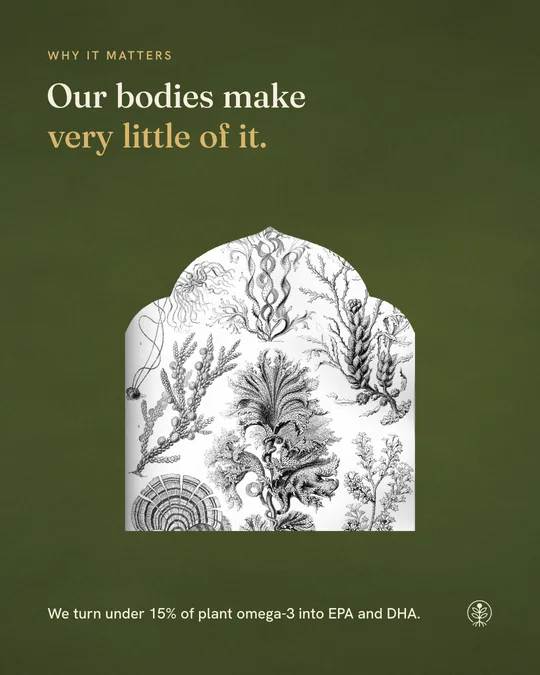
Why it matters: our bodies can turn plant omega-3 (ALA, from foods like flaxseed) into EPA and DHA, but only a little. Reported conversion rates are under 15%.
So if you do not eat fish, you can go straight to the source. Algae give EPA and DHA with no fish involved.
Samya does exactly that: 450 mg EPA and 150 mg DHA in every two capsules, from algae. ₹760 (MRP ₹950, incl. of all taxes).
Not intended to diagnose, treat, cure or prevent any disease.
Sources
- NIH Office of Dietary Supplements, Omega-3 Fatty Acids fact sheet.
- Images: Luis Meléndez, Still Life with Fish, Bread, and Kettle, c. 1772, Cleveland Museum of Art (Open Access); Ernst Haeckel, Kunstformen der Natur, 1904; Sargassum herbarium sheet, Coastal Carolina University.